















Catégorie : Echange
-
Zebra - biology.
C Life Span Captive zebras have lived into their late 30s. Life expectancy in the wild, where predators abound, is probably not much more than 12 years. IV SOCIAL BEHAVIOR Like horses, zebras have large brains and a wide variety of social behaviors. Although they cannot match the overall intelligence of mammals that hunt, zebras interactwith each other in complex ways. Zebras usually live in groups known as herds, but the social structure of these groups depends on the species. The plains zeb...
-
Coffee - biology.
States law, the addition of chicory or any other substance must be clearly stated on the brand label. IV HISTORY Exactly where and when coffee was first cultivated is not known, but some authorities believe that it was grown initially in Arabia near the Red Sea about AD675. Coffee cultivation was rare until the 15th and 16th centuries, when extensive planting of the tree occurred in the Yemen region of Arabia. The consumption of coffee increasedin Europe during the 17th century, prompting the...
-
Corn - biology.
small larvae of the cucumber beetles feed on the root system of the developing plants. VII PRODUCTION AND CONSUMPTION World output of corn at the beginning of the 21 st century was about 603 million metric tons annually; in volume of production, corn ranked first, ahead of rice and wheat. A net gain of about 51 percent in production was realized during the last two decades; intensive cultivation with heavy use of fertilizer and herbicides wasresponsible for the increase. The United States is t...
-
Cotton - biology.
VII COTTONSEED Once a waste-disposal problem for gins, cottonseed is now a valuable by-product. The seed goes to oil mills, where it is delinted of its linters in an operation similar toginning. The bare seed is then cracked and the kernel removed. The meal that remains after the oil has been extracted is high in protein. Linters are used for paddingin furniture and automobiles, for absorbent cotton swabs, and for manufacture of many cellulose products such as rayon, plastics, lacquers, and sm...
-
Astronomy - astronomy.
Telescopes may use either lenses or mirrors to gather visible light, permitting direct observation or photographic recording of distant objects. Those that use lenses arecalled refracting telescopes, since they use the property of refraction, or bending, of light ( see Optics: Reflection and Refraction ). The largest refracting telescope is the 40-in (1-m) telescope at the Yerkes Observatory in Williams Bay, Wisconsin, founded in the late 19th century. Lenses bend different colors of light by d...
-
History of Astronomy - astronomy.
Egypt, the Sun was directly overhead at noon. On the same date and time in Alexandria, Egypt, the Sun was about 7 degrees south of zenith. With simple geometryand knowledge of the distance between the two cities, he estimated the circumference of the Earth to be 250,000 stadia. (The stadium was a unit of length, derivedfrom the length of the racetrack in an ancient Greek stadium. We have an approximate idea of how big an ancient Greek stadium was, and based on that approximationEratosthenes was...
-
Astrophysics - astronomy.
Contributed By:George Brooks FieldMicrosoft ® Encarta ® 2009. © 1993-2008 Microsoft Corporation. All rights reserved.
-
Big Bang Theory - astronomy.
hydrogen atoms. Hydrogen atoms can only absorb and emit specific colors, or wavelengths, of light. The formation of atoms allowed many other wavelengths of light,wavelengths that had been interfering with the free electrons prior to the cooling of the universe, to travel much farther than before. This change set free radiation thatwe can detect today. After billions of years of cooling, this cosmic background radiation is at about 3 K (-270°C/-454°F).The cosmic background radiation was first d...
-
-
Cosmology - astronomy.
In 1917 American scientist Harlow Shapley measured the distance to several groups of stars known as globular clusters. He measured these distances by using amethod developed in 1912 by American astronomer Henrietta Leavitt. Leavitt’s method relates distance to variations in brightness of Cepheid variables, a class of starsthat vary periodically in brightness. Shapley’s distance measurements showed that the clusters were centered around a point far from the Sun. The arrangement of theclusters was...
-
Eclipse - astronomy.
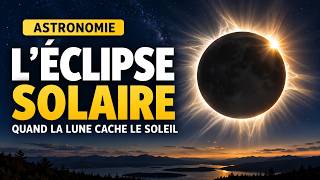
bending of light rays passing close to the sun because of the sun’s gravitational field ( see Relativity). The great brilliance of the solar disk and the sun-induced brightening of the earth’s atmosphere make observations of the corona and nearby stars impossible except during a solar eclipse. The coronagraph, a photographictelescope, permits direct observation of the edge of the solar disk at all times. Today, scientific solar eclipse observations are extremely valuable, particularly when thepa...
-
Gravitation - astronomy.
precise observations possible, and Galileo was one of the first to use a telescope to study astronomy. In 1609 Galileo observed that moons orbited the planet Jupiter, afact that could not reasonably fit into an earth-centered model of the heavens. The new heliocentric theory changed scientists' views about the earth's place in the universe and opened the way for new ideas about the forces behind planetarymotion. However, it was not until the late 17th century that Isaac Newton developed a theory...
-
Infrared Astronomy - astronomy.
ft above sea level. With the launch of the Infrared Astronomical Satellite (IRAS), by the United States, the United Kingdom, and The Netherlands in 1983, infraredastronomy took another leap forward. This mission surveyed the entire sky at wavelengths of 12, 25, 60, and 100 microns (1 micron is a millionth of a meter) until itsonboard supply of liquid helium ran out. A short time later infrared astronomy was revolutionized by the first introduction of devices that could take infrared images. Thea...
-
Light - astronomy.
Each different frequency or wavelength of visible light causes our eye to see a slightly different color. The longest wavelength we can see is deep red at about 700 nm.The shortest wavelength humans can detect is deep blue or violet at about 400 nm. Most light sources do not radiate monochromatic light. What we call white light,such as light from the Sun, is a mixture of all the colors in the visible spectrum, with some represented more strongly than others. Human eyes respond best to greenlight...
-
Planetary Science - astronomy.
III ORIGINS AND COMPOSITIONS OF PLANETS Astronomers believe that planetary systems are formed of elemental materials that were created in the interiors of giant stars. Some of this material comes from giantstars that shed material into space as they age. Most of the matter to form planets, however, comes from stars that explode as supernovas and spread debris enrichedwith the heavier chemical elements into space. According to the currently accepted views, the most likely first stage in the evo...
-
Radio Astronomy - astronomy.
equivalent to the apparent angular dimensions of a basketball at the distance of the moon. In 1984, the U.S. government appropriated funds for the construction of aninstallation called the very long baseline array (VLBA), a network of 10 radio antennas spread from the U.S.-Canadian border to Puerto Rico and from Hawaii to the U.S.Atlantic coast. The VLBA is expected to provide angular resolutions in the range of 200-millionths of an arc second. Canada and Australia are both planning similarprogr...
-
Redshift - astronomy.
Astronomers can also use redshift to identify the oldest and most distant objects in the observable universe. Astronomers believe that quasars are the most distantobjects in the universe, because they have some of the largest redshifts. Quasars are objects in space that strongly emit radio waves. Astronomers originally namedthese objects quasars, which stands for quas i-stell ar (or starlike) radio source, because they appear as points of light, like stars, in photographs of the sky. When astro...
-
-
Relativity - astronomy.
beta, for example, might be as large as 0.5, and the mass of the electron doubled. The mass of a rapidly moving electron could be easily determined by measuring thecurvature produced in its path by a magnetic field; the heavier the electron, the greater its inertia and the less the curvature produced by a given strength of field ( see Magnetism). Experimentation dramatically confirmed Einstein's prediction; the electron increased in mass by exactly the amount he predicted. Thus, the kinetic ener...
-
X-Ray Astronomy - astronomy.
Some neutron stars have weaker magnetic fields that allow incoming material to settle onto the entire surface of the neutron star. Eventually, so much material buildsup that the surface layer becomes dense enough to set off a vast thermonuclear explosion, called an outburst. The explosion heats gas to produce X rays. Such aneutron star—called an X-ray burster—can increase its X-ray production by a million times during an outburst. The X-ray glow fades over time, and the binary systementers a lon...
-
Dark Matter - astronomy.
observed, and the measured frequency of such events has placed limits on how much dark matter can take the form of MACHOs. From the observations that have beenmade by astronomers, it is now known that MACHOs cannot be the dominant constituent of dark matter. There are simply not enough such gravitational lenses. Physicists suspect that a more exotic form of cold dark matter must exist. This form is not baryonic. Like neutrinos, this form barely interacts with ordinary matter, butis some type of...
-
Extrasolar Planets - astronomy.
When a planet passes in a front of the star it orbits—an event called a transit—it causes a small dip in the brightness of the star. Measuring the slight change in thebrightness can be used not only to directly detect a planet, but to determine its size and orbit. However, the planet needs to orbit in a plane that lies in a telescope’sline of sight on the star. Despite long odds, Earth-based telescopes have detected and studied a few exoplanets using this method. The first space telescope design...