


















Catégorie : Echange
-
Snake (reptile).
in their heads that conduct sound. They are able to hear low-frequency sounds and to sense vibrations that travel through the ground or water. The majority of snakeshave good eyesight, especially for detecting moving objects, although most burrowing snakes can only distinguish between light and dark. Pit vipers, boas, and pythons have an unusual adaptation for detecting warm-blooded prey and predators. On the heads of these snakes are small pits lined with cellsthat are extremely sensitive to he...
-
Sailing.
the sails sweep across the decks of the vessel from one side to the other, and also because of the danger of breaking spars. In wild jibing, control can be lostmomentarily and, if the seas are high, a small boat can broach —that is, veer on its side with danger of swamping or capsizing. An unintentional jibe in a heavy wind frequently has enough force to break the masts of a vessel. When jibing intentionally, careful sailors always haul in on the boom while turning, so that the boom willtravel...
-
Running.
Contributed By:Jeff HollobaughMicrosoft ® Encarta ® 2009. © 1993-2008 Microsoft Corporation. All rights reserved.
-
From Bulfinch's Mythology: Theseus - anthology.
One of the most celebrated of the adventures of Theseus is his expedition against the Amazons. He assailed them before they had recovered from the attack ofHercules, and carried off their queen Antiope. The Amazons in their turn invaded the country of Athens and penetrated into the city itself; and the final battle inwhich Theseus overcame them was fought in the very midst of the city. This battle was one of the favourite subjects of the ancient sculptors, and is commemorated inseveral works of...
-
From Bulfinch's Mythology: The Trojan War - anthology.
As in a dream. Dimly I could descryThe stern black-bearded kings, with wolfish eyes,Waiting to see me die. 'The tall masts quivered as they lay afloat,The temples and the people and the shore;One drew a sharp knife through my tender throatSlowly,—and—nothing more.' The wind now proving fair the fleet made sail and brought the forces to the coast of Troy. The Trojans came to oppose their landing, and at the first onset Protesilaus[mythological king of Phylace, in Thessaly] fell by the hand of...
-
From Bulfinch's Mythology: Hero and Leander - anthology.
That tale is old, but love anewMay nerve young hearts to prove as true.' Source: Bulfinch, Thomas. Bulfinch's Mythology: The Age of Fable, The Age of Chivalry, Legends of Charlemagne. New York: Random House, 1934.
-
From Bulfinch's Mythology: Minerva (Athena) - anthology.
Spenser tells the story of Arachne in his 'Muiopotmos,' adhering very closely to his master Ovid, but improving upon him in the conclusion of the story. The twostanzas which follow tell what was done after the goddess had depicted her creation of the olive tree: 'Amongst these leaves she made a Butterfly, With excellent device and wondrous slight,Fluttering among the olives wantonly,That seemed to live, so like it was in sight;The velvet nap which on his wings doth lie,The silken down with whic...
-
From Bulfinch's Mythology: Proserpine - anthology.
the furrow, the seed failed to come up; there was too much sun, there was too much rain; the birds stole the seeds—thistles and brambles were the only growth.Seeing this, the fountain Arethusa interceded for the land. 'Goddess,' said she, 'blame not the land; it opened unwillingly to yield a passage to your daughter. I can tellyou of her fate, for I have seen her. This is not my native country; I came hither from Elis. I was a woodland nymph, and delighted in the chase. They praised mybeauty, bu...
-
- From Bulfinch's Mythology: The Phoenix - anthology.
-
From Bulfinch's Mythology: Perseus and Medusa - anthology.
The Sea-monster Perseus, continuing his flight, arrived at the country of the Æthiopians, of which Cepheus was king. Cassiopeia his queen, proud of her beauty, had dared to compareherself to the Sea-Nymphs, which roused their indignation to such a degree that they sent a prodigious sea-monster to ravage the coast. To appease the deities,Cepheus was directed by the oracle to expose his daughter Andromeda to be devoured by the monster. As Perseus looked down from his aerial height he beheld thev...
-
From Bulfinch's Mythology: The Golden Fleece - anthology.
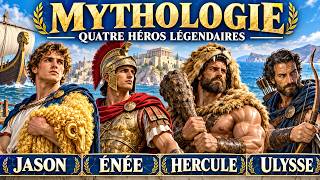
It remained to lull to sleep the dragon that guarded the fleece, and this was done by scattering over him a few drops of a preparation which Medea had supplied. Atthe smell he relaxed his rage, stood for a moment motionless, then shut those great round eyes, that had never been known to shut before, and turned over on his side,fast asleep. Jason seized the fleece and with his friends and Medea accompanying, hastened to their vessel before Æetes the king could arrest their departure, andmade the...
-
From Bulfinch's Mythology: Hercules - anthology.
'…amidst the gardens fairOf Hesperus and his daughters three,That sing about the golden tree.' The poets, led by the analogy of the lovely appearance of the western sky at sunset, viewed the west as a region of brightness and glory. Hence they placed in it theIsles of the Blest, the ruddy Isle Erytheia, on which the bright oxen of Geryon were pastured, and the Isle of the Hesperides. The apples are supposed by some to bethe oranges of Spain, of which the Greeks had heard some obscure account...
-
From Bulfinch's Mythology: Midas - anthology.
Gordius, being made king, dedicated his wagon to the deity of the oracle, and tied it up in its place with a fast knot. This was the celebrated Gordian knot, which, in after times it was said, whoever should untie should become lord of all Asia. Many tried to untie it, but none succeeded, till Alexander the Great, in his career ofconquest, came to Phrygia. He tried his skill with as ill success as others, till growing impatient he drew his sword and cut the knot. When he afterwards succeeded i...
-
From Bulfinch's Mythology: Prometheus and Pandora - anthology.
The world being thus furnished with inhabitants, the first age was an age of innocence and happiness, called the Golden Age. Truth and right prevailed, though not enforced by law, nor was there any magistrate to threaten or punish. The forest had not yet been robbed of its trees to furnish timbers for vessels, nor had men builtfortifications round their towns. There were no such things as swords, spears, or helmets. The earth brought forth all things necessary for man, without his labour inplo...
-
From Bulfinch's Mythology: The Myrmidons - anthology.
This description of the plague is copied by Ovid from the account which Thucydides, the Greek historian, gives of the plague of Athens. The historian drew from life,and all the poets and writers of fiction since his day, when they have had occasion to describe a similar scene, have borrowed their details from him. Source: Bulfinch, Thomas. Bulfinch's Mythology: The Age of Fable, The Age of Chivalry, Legends of Charlemagne. New York: Random House, 1934.
-
From Bulfinch's Mythology: Meleager and Atalanta - anthology.
Althea, when the deed was done, laid violent hands upon herself. The sisters of Meleager mourned their brother with uncontrollable grief; till Diana, pitying thesorrows of the house that once had aroused her anger, turned them into birds. Atalanta The innocent cause of so much sorrow was a maiden whose face you might truly say was boyish for a girl, yet too girlish for a boy. Her fortune had been told, and itwas to this effect: 'Atalanta, do not marry; marriage will be your ruin.' Terrified...
-
- From Bulfinch's Mythology: Pegasus and the Chimera - anthology.
-
From Bulfinch's Mythology: Echo and Narcissus - anthology.
So may'st thou be translated to the skies,And give resounding grace to all heaven's harmonies.' Milton has imitated the story of Narcissus in the account which he makes Eve give of the first sight of herself reflected in the fountain. 'That day I oft remember when from sleepI first awaked, and found myself reposedUnder a shade on flowers, much wondering whereAnd what I was, whence thither brought, and howNot distant far from thence a murmuring soundOf waters issued from a cave, and sprea...
-
From Bulfinch's Mythology: Iona - anthology.
Iona, from its position in the western seas, was exposed to the assaults of the Norwegian and Danish rovers by whom those seas were infested, and by them it wasrepeatedly pillaged, its dwellings burned, and its peaceful inhabitants put to the sword. These unfavourable circumstances led to its gradual decline, which wasexpedited by the subversion of the Culdees throughout Scotland. Under the reign of Popery [the Pope] the island became the seat of a nunnery, the ruins of which arestill seen. At t...
-
From Bulfinch's Mythology: Orpheus and Eurydice - anthology.
Now under hanging mountains,Beside the falls of fountains,Or where Hebrus wanders,Rolling in meanders,All alone,He makes his moan,And calls her ghost,For ever, ever, ever lost!Now with furies surrounded,Despairing, confounded,He trembles, he glows,Amidst Rhodope's snows.See, wild as the winds o'er the desert he flies;Hark! Hæmus resounds with the Bacchanals' cries.Ah, see, he dies!Yet even in death Eurydice he sung,Eurydice still trembled on his tongue:Eurydice the woodsEurydice the floodsEurydi...