
DIX, OTTO
Publié le 22/02/2012

Extrait du document
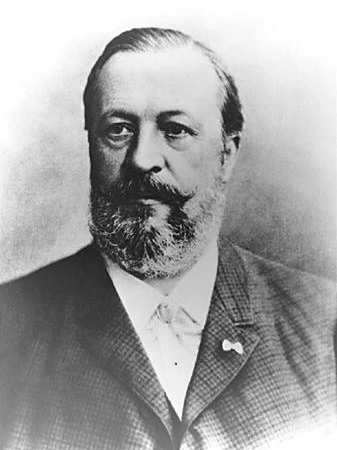
DIX, OTTO (1891–1969), artist; best known for his harsh portraits of postwar
German society. Born in Untermhaus, near Gera, he studied art privately in
1905–1909 while working in Gera as a decorator's apprentice. His artistic training
began in 1909 at Dresden's Technische Hochschule; he remained in the
Saxon capital for five years. But it was his wartime ordeal as commander of a
machine-gun unit that led to the stark black-and-white drawings of the 1920s.
After the war he returned to Dresden to study at the prestigious Kunstakademie.
Although Dix was a founding member of Dresden's predominantly Expressionist
Sezessiongruppe 1919, his work increasingly reflected the mentality espoused
by German Dada.* Intent on rendering the dreadful reality of both the
war and postwar German society, he rejected Expressionism* and endeavored,
as he later explained, ‘‘to achieve a representation of our age, for I believe that
a picture must above all express a content, a theme.'' In concert with George
Grosz,* his art linked humor with irony and satire. The themes of poverty,
suffering, and prostitution were central to his attack on the morality of postwar
bourgeois society. During 1922–1925 he studied at the Du¨sseldorf Kunstakademie,
became a member of the group Das junge Rheinland, and worked primarily
in watercolors. Having joined and exhibited with the Berliner Sezession
in 1924, Dix relocated to Berlin* in 1925 and worked as a freelance artist.
Reducing the irony and eroticism evident in much of his early Weimar work,
his Berlin period (1925–1927) was marked by his pitilessly realistic portraiture.
With some regret he left Berlin in 1927 to begin a successful teaching career at
Dresden's Kunstakademie. Appointment to the Prussian Academy of Arts followed
in 1931. His art, especially after 1929, was increasingly obsessed with
war, death, and dying, perhaps best depicted in his graphic cycle Krieg (War),
painted during 1929–1932.
When the Nazis seized power, most of Dix's work was labeled pornographic
or grotesquely unheroic. Dismissed from his post and forced to resign his membership
in the Prussian Academy, he was forbidden to exhibit in 1934. About
260 of his works were impounded; 26 were included in the 1937 traveling
exhibition Entartete Kunst (Degenerate Art). In 1939 he was briefly arrested
under suspicion of being part of a Munich conspiracy to assassinate Hitler.*
Liens utiles
- Rank, Otto - psychologie & psychanalyse.
- ÉTAT JURIDIQUE (L’) Otto Bähr
- SACRÉ (Le) Rudolf Otto (Résumé et analyse)
- OTTO DIX LA GUERRE
- TRAUMATISME DE LA NAISSANCE (LE), Otto Rank (résumé & analyse)